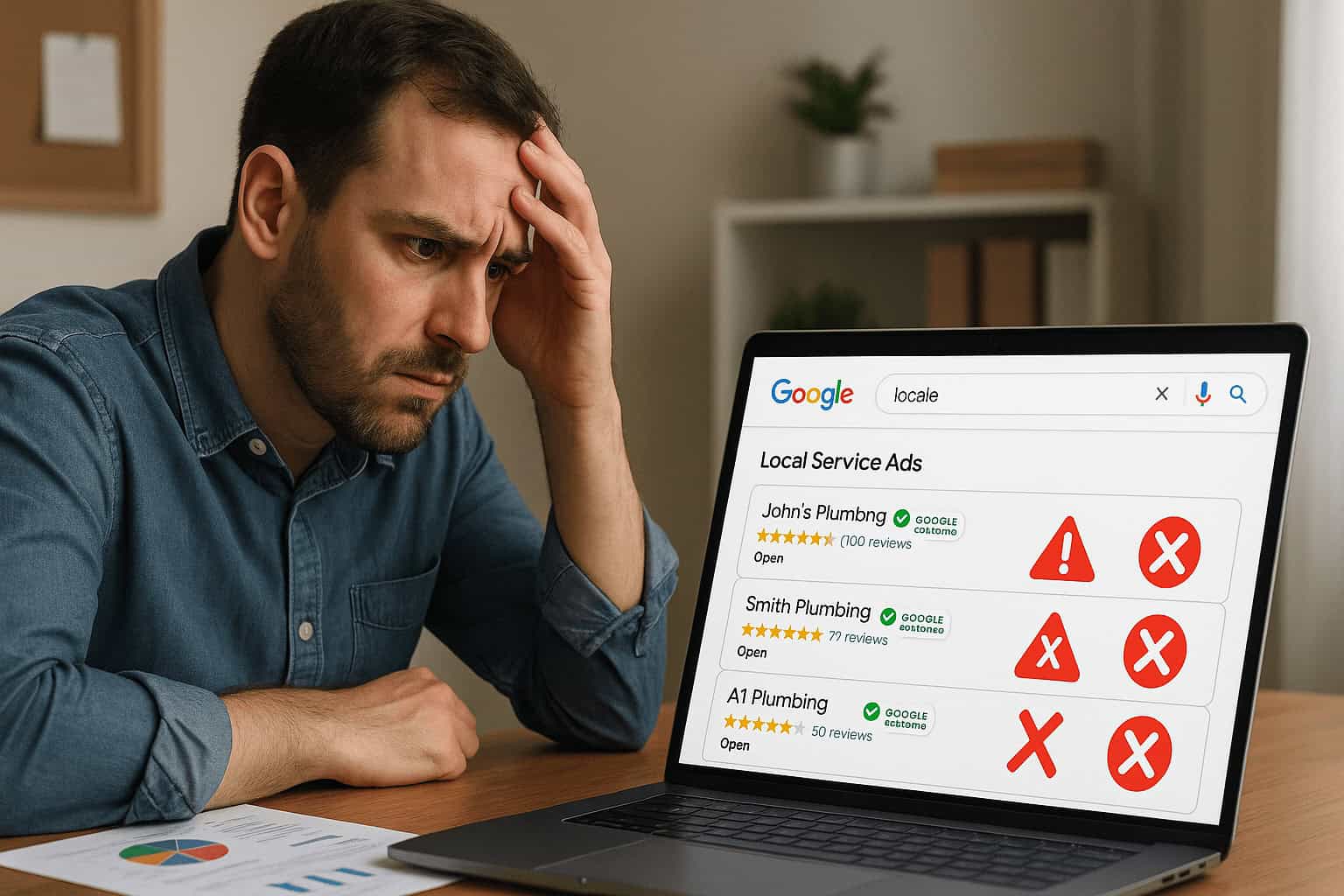

You’re spending money on marketing. You’re showing up somewhere online. But the phone still isn’t ringing enough. Sound familiar?
Here’s the uncomfortable truth: most local contractors are burning cash on lead-generation strategies that were never designed to work for their business model.
They’re following advice meant for e-commerce brands, copying tactics from national chains, or worse—trusting their marketing budget to platforms that profit whether you succeed or fail.
After working with dozens of home improvement contractors across roofing, fencing, HVAC, kitchen remodeling, and general contracting, I’ve seen the same patterns repeat.
The contractors who thrive aren’t the ones spending the most on marketing. They’re the ones who’ve figured out which three channels actually matter and how to make them work together.
The Brutal Reality: Why Your Leads Aren’t Converting
Before we dive into what works, let’s talk about why most lead generation strategies for contractors fail. Understanding these mistakes will save you thousands in wasted ad spend.
Mistake #1: Treating All Leads Equally
Not all leads are created equal. A homeowner who finds you through a Google search for “emergency roof repair near me” is fundamentally different from someone who clicked a Facebook ad showing before-and-after photos.
The searcher on Google has a problem right now. They’re comparing you against 2-3 other contractors who also showed up in their search. Price matters, but speed and trust matter more.
The Facebook lead? They were scrolling through vacation photos when your ad interrupted them. They might need a new roof eventually, but they’re in research mode—often 6-12 months away from making a decision.
Most contractors dump both leads into the same follow-up process and wonder why conversion rates are terrible. According to Harvard Business Review’s research on lead response times, companies that contact leads within 5 minutes are 100 times more likely to connect than those who wait 30 minutes. For emergency services, that window is even tighter.
Mistake #2: Ignoring the Math Behind Sustainable Lead Flow
Here’s a question most contractors can’t answer: What’s your actual cost per acquisition?
Not your cost per lead. Your cost per customer who actually pays you money.
Let’s break down real numbers from a mid-sized roofing company in Ohio:
- Monthly ad spend: $3,000
- Leads generated: 45
- Qualified estimates scheduled: 18 (40% qualification rate)
- Jobs closed: 6 (33% close rate)
- Average job value: $8,500
- Total revenue from marketing: $51,000
- Cost per acquisition: $500
- Return on ad spend: 17:1
Looks good. Now compare that to a contractor spending the same $3,000 but spreading it thin across seven different channels:
- Google Ads
- Facebook Ads
- Angi (formerly Angie’s List)
- HomeAdvisor
- Thumbtack
- Local newspaper ads
- Direct mail
Same budget, but diluted across platforms with different lead quality, response expectations, and conversion patterns. Their actual numbers:
- Monthly ad spend: $3,000
- Leads generated: 67 (more leads!)
- Qualified estimates scheduled: 13 (19% qualification rate)
- Jobs closed: 4 (31% close rate)
- Average job value: $7,200
- Total revenue from marketing: $28,800
- Cost per acquisition: $750
- Return on ad spend: 9.6:1
More leads generated, but fewer jobs closed, and a worse return on investment. The contractor with focus wins every time.
Mistake #3: Your Competitor’s Secret Weapon Isn’t What You Think
You know that competitor down the street? The one with worse reviews, older trucks, and a website that looks like it was built in 2010?
They’re still getting more calls than you.
Why?
Because they’ve mastered response time and follow-up consistency—not flashy marketing tactics.
A study by Velocify found that calling a lead back within 1 minute increases conversion rates by 391% compared to waiting 10 minutes. Most contractors take hours or even days to respond to new leads.
Your competitor with the terrible website? They call back in 90 seconds. Every time. Their follow-up system sends a text confirmation, then calls again if they miss the first attempt, and then emails a calendar link. It’s not sophisticated, but it’s consistent.
Meanwhile, you’re crafting the perfect email response and optimizing your Instagram feed. Speed beats polish in local service businesses.
The Three Lead Generation Strategies For Contractors Actually Worth Your Investment
Now that we’ve covered why most strategies fail, let’s focus on what actually works.
For local contractors, there are only three channels that consistently deliver positive ROI when executed properly.
Channel #1: Google Local Services Ads (The Most Underrated Opportunity)
If you’re not familiar with Google Local Services Ads (LSAs), you’re missing the single best lead generation tool for local contractors right now.
Unlike traditional Google Ads, where you pay per click, LSAs charge you per lead—typically between $15-$50, depending on your industry and market. You only pay when someone calls or messages you directly through Google.
More importantly, LSAs appear above traditional Google Ads and organic search results. You literally cannot buy better placement on Google for local services.
Real numbers from a Cleveland-area HVAC company:
- Monthly LSA budget: $2,000
- Average cost per lead: $35
- Leads received: 57
- Show-up rate: 82% (47 appointments)
- Close rate: 45% (21 jobs)
- Average job value: $3,200
- Total revenue: $67,200
- Cost per acquisition: $95
- Return on ad spend: 33.6:1
The catch?
Google vets these advertisers heavily. You need to pass a background check, maintain a minimum Google review rating (typically 3.0+), and provide proper licensing and insurance documentation. These requirements filter out fly-by-night operators, which means leads trust LSA providers more.
I’ve written extensively about common Google Local Services Ads mistakes that can cost you thousands. The most critical:
- Incomplete service area setup: Missing neighboring ZIP codes means missing leads
- Poor profile optimization: No photos or generic descriptions kill conversion
- Slow response times: LSA leads expect immediate contact
- Ignoring the dispute process: You can dispute and refund bad leads, but most contractors don’t
The contractors dominating LSAs treat it like an on-demand lead faucet. They adjust their budget based on capacity, pause during busy weeks, and ramp up when crews need work.
Channel #2: Organic Local SEO (The Long Game That Pays Forever)
While LSAs give you instant visibility, local SEO is the foundation that generates free leads for years.
Think about how you search when you need a service. Most people type something like “roofing company near me” or “HVAC repair Cleveland.” They click on the map results (the Local 3-Pack) or the top organic listings.
If you’re not showing up there, you’re invisible to the most motivated buyers in your market.
The components that matter for local contractors:
1. Google Business Profile optimization
Your Google Business Profile is your most valuable digital asset. It’s free, and it’s often the first thing potential customers see.
Critical elements:
- Complete every profile section (hours, services, attributes)
- Add photos weekly (before/after shots, team photos, project updates)
- Respond to every review within 24 hours
- Post weekly updates (projects, seasonal tips, promotions)
- Upload videos when possible
According to BrightLocal’s Local Consumer Review Survey, 87% of consumers read online reviews of local businesses, and 79% trust them as much as personal recommendations. Reviews aren’t just social proof—they’re a ranking factor.
2. Location-based content
Creating location pages for each service area you cover dramatically improves local visibility. But here’s what most contractors get wrong: they make thin, duplicate content that Google ignores.
Instead of 20 identical pages that swap out city names, create genuinely unique content:
- Local project case studies with photos
- Neighborhood-specific service considerations (older homes in Cleveland Heights need different approaches than new construction in Westlake)
- Local building codes and permit requirements
- Weather-related advice specific to the area
3. Service-specific pages
Don’t just have a page that lists “roofing services.” Create detailed pages for:
- Roof repair vs. replacement (help people self-diagnose)
- Emergency roofing services (targets high-intent searches)
- Insurance claim assistance (huge differentiator)
- Specific roofing materials (asphalt shingles, metal roofing, etc.)
Each page should target specific search queries that potential customers actually type into Google. Use tools like Google’s autocomplete or AnswerThePublic to find real questions people ask.
Real numbers from a general contractor after 12 months of local SEO:
- Organic traffic increase: 340%
- Leads from organic search: 89 (was 18)
- Close rate: 38%
- Jobs from SEO: 34
- Average job value: $12,500
- Total revenue from SEO: $425,000
- Ongoing SEO investment: $1,500/month
- Total 12-month investment: $18,000
- Return on investment: 23.6:1
The key difference? These leads are free after the initial investment. Unlike paid ads that stop the moment you stop paying, SEO compounds over time. That contractor will continue generating leads from their SEO work for years.
I’ve compiled a detailed local SEO checklist that covers everything from technical optimization to content strategy. The tactics haven’t changed much in years—because they work.
Channel #3: Strategic Review Acquisition (Your Most Powerful Trust Signal)
Here’s an uncomfortable truth: your potential customers are looking at your reviews right now. In fact, they’re looking at your competitor’s reviews too.
BrightLocal research shows that 98% of consumers read online reviews for local businesses. More importantly, 49% of consumers need at least a 4-star rating before they’ll consider using a company.
But most contractors approach reviews backwards. They wait for happy customers to leave reviews organically (they won’t), or they panic-respond only when they get a bad review.
The contractors winning the review game have a systematic approach:
The review acquisition system that works:
Step 1: Ask at the right moment
Timing matters enormously. The best time to ask for a review is immediately after a moment of peak satisfaction:
- Right after successful project completion
- After solving a complex problem
- When a customer gives you verbal praise
Don’t wait days or weeks. Strike while the emotional high is fresh.
Step 2: Make it stupid simple
Every friction point in your review request process halves your response rate.
Send a text message with a direct link to your Google review page.
No logins, no multiple steps, no email follow-ups that get buried.
Example text: “Hi [Name], thanks for trusting us with your roof! We’d really appreciate it if you could share your experience with others: [direct review link]. It takes just 60 seconds and helps us reach more homeowners like you.”
Step 3: Focus on volume and recency
Google’s algorithm heavily weighs recent reviews. A contractor with 50 reviews averaging 4.8 stars (with 15 reviews in the last month) will outrank a contractor with 200 reviews averaging 4.9 stars (but only two reviews in the previous 6 months).
Set a goal for reviews per month based on your job volume. If you complete 20 jobs per month, aim for at least 10 reviews. That’s a 50% response rate, which is achievable with a solid system.
Step 4: Respond to everything
Every review deserves a response—positive and negative. Your responses aren’t really for the reviewer; they’re for the next potential customer reading through your profile.
Good review responses:
- Thank the customer by name
- Mention specific project details
- Reinforce your values or process
- Stay under 100 words
For guidance on handling difficult situations, I’ve written about dealing with negative reviews and promoting your good reviews.
Why reviews compound your other marketing efforts:
Reviews don’t just build trust—they amplify your other channels:
- Higher review ratings increase LSA and Google Ads click-through rates
- Review volume and recency improve local SEO rankings
- Positive reviews reduce the objections you face during sales calls
A roofing contractor I worked with increased their average review rating from 4.2 to 4.7 over six months. Their LSA cost-per-lead dropped by 23% during the same period—simply because more people clicked when they saw the better rating.
Making It Work: The Implementation Framework
Understanding which channels to focus on is only half the battle. Here’s how to actually implement this for your contracting business.
Month 1-2: Foundation and Setup
Week 1-2: Google Business Profile optimization
- Claim or verify your listing
- Complete every profile section
- Add 20+ photos (projects, team, equipment)
- Create a review request process
- Set up a weekly posting schedule
Week 3-4: Google Local Services Ads launch
- Complete background check and verification
- Set up service categories
- Configure service areas (include surrounding ZIP codes)
- Set initial budget ($500-1,000 to test)
- Create a phone tracking system
Week 5-6: Create a Review Acquisition System
- Create review request text templates
- Generate direct review links
- Train staff on the asking process
- Set up review monitoring
- Prepare response templates
Week 7-8: Content strategy planning
- Identify service area pages needed
- List service-specific content opportunities
- Gather project photos and customer testimonials
- Create a content calendar
- Plan first four blog posts
Months 3-6: Optimization and Scaling
By now you should be seeing:
- 20-40 leads per month from LSAs
- 3-5 leads per month from organic search (growing)
- 8-12 new reviews per month
- Precise data on which leads convert best
Focus areas:
- Adjust the LSA budget based on capacity and lead quality
- Create location and service pages (2-3 per month)
- Publish educational blog content (lead generation strategies work best)
- Refine review request timing based on response rates
- Start building backlinks to your website
Month 6-12: Consistency and Dominance
By six months, you should have:
- 50-80 leads per month from combined channels
- Top 3 ranking in Google Maps for primary services
- 100+ total reviews with 4.5+ star rating
- Organic traffic growing 20-30% month over month
Advanced strategies:
- Launch seasonal campaigns (storm damage, winter prep)
- Create video content for YouTube and Google Business Profile
- Develop referral partner network
- Test expansion into adjacent service areas
- Build an email list for past customers (seasonal maintenance reminders)
The Common Objections (And Why They’re Wrong)
“I don’t have time to do all this marketing stuff.”
You don’t have time NOT to do it. Every month you delay is a month your competitor is capturing customers who should be calling you. Start with LSAs—it takes 2 hours to set up and 30 minutes per week to manage.
“My customers don’t leave reviews.”
Your customers absolutely leave reviews—just not for you. They’re leaving them for restaurants, retail stores, and your competitors. You’re not asking correctly or making it easy enough.
“I get all my business from referrals.”
Referrals are great until they’re not. What happens when your best referral source retires? Or moves? Or switches to a competitor? Relying solely on referrals means you’re always one relationship away from a revenue crisis.
“Marketing is too expensive.”
Know what’s more expensive? Having crews sitting idle. Dead time costs you payroll, equipment payments, insurance, overhead—all with zero revenue coming in. Even expensive leads are profitable if they keep your team working.
“I tried Google Ads before, and it didn’t work.”
Traditional Google Ads and Google Local Services Ads are entirely different products.
Most contractors fail at regular Google Ads because they’re competing against national brands with massive budgets. LSAs level the playing field for local providers.
The Bottom Line: Focus Beats Fancy
The contractors who thrive in the next five years won’t be the ones with the most marketing channels. They’ll be the ones who master the three that actually matter:
- Google Local Services Ads for immediate, high-intent leads
- Local SEO for sustainable, free traffic that compounds over time
- Strategic review acquisition for trust signals that amplify everything else
Stop chasing every new marketing trend. Stop spreading your budget across a dozen platforms that deliver mediocre results. Focus your time, money, and energy on these three channels, execute them well, and you’ll generate more leads than you can handle.
The math is simple. The execution is straightforward. The only question is: are you ready to stop doing what doesn’t work and start doing what does?
Ready to Build a Lead Generation System That Actually Works?
At LocalBizGuru, we specialize in helping local contractors dominate their markets through Google Local Services Ads, local SEO, and review management. We don’t just set up campaigns—we build complete lead generation systems that turn your website into your best salesperson.
Schedule a free strategy session to discuss your specific situation and see if we’re a good fit to help you grow.